Programme 2026

Béla Fleck, Edmar Castaneda, Antonio Sánchez
Friday
6/2/2026, 19.30
Sono
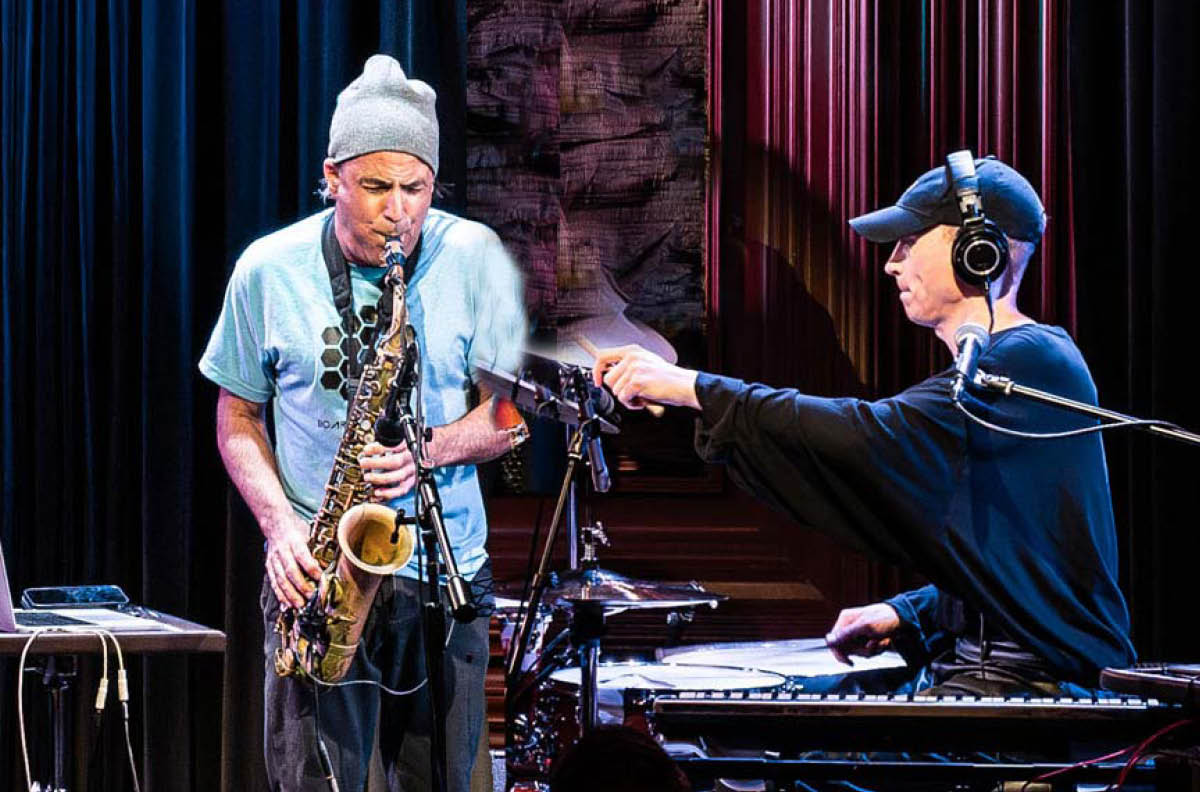
“What on earth is this?” — that’s probably what most people think when they read the instrumentation of this trio. Yes, banjo, harp, and drums! Can that possibly work together? Oh yes — relax… it works brilliantly.
Line up:
Béla Fleck – banjo, Edmar Castaneda llanera – harp, Antonio Sánchez – drums
The trio, known by the acronym BEATrio, is one of those projects in modern instrumental music that immediately sparks curiosity. In this unusual combination of instruments come together true masters: banjo virtuoso Béla Fleck, harpist Edmar Castañeda, and drummer Antonio Sánchez. As Sánchez himself once put it, BEATrio represents “one of the most unlikely trio configurations anyone has ever seen.” Béla Fleck added that the curiosity and amazement of audiences remind him of the early days of his pioneering band Flecktones, when people also used to ask, “How the hell is that supposed to work?”
For Fleck — who has been pushing the banjo into uncharted territories for decades — the choice of this unconventional lineup is a deliberate one. He always seeks collaborators who can play in ways no one else can. Castañeda and Sánchez fit that description perfectly, and Fleck sees their first joint album, BEATrio, released this year, as only the beginning of a long journey.
BEATrio unites three musical giants, each deeply rooted in different traditions — and each a virtuoso who has redefined the possibilities of his instrument. Across all genres, Béla Fleck is undoubtedly the most renowned, recognized worldwide as the leading and most progressive banjo player of our time. Over the course of his career, he has been nominated for Grammy Awards in more categories than any other artist in history and has won nearly twenty of them. His career is defined by a fearless openness to musical exploration — expanding from traditional bluegrass and folk into jazz, fusion, classical, and world music. From New Grass Revival through his world-famous jazz-rock group Flecktones, duets with Chick Corea, and even his own reimagining of Rhapsody in Blue, Fleck has consistently broken instrumental boundaries.
Harpist and composer Edmar Castañeda, born in Bogotá, Colombia, has done for the harp in Latin music what Fleck has done for the banjo in American music. Castañeda masterfully blends Colombian folk traditions with jazz language, adapting intricate finger techniques to perform jazz melodies and Afro-Cuban rhythms. He is the “glue” of BEATrio — playing bass lines with one hand (routed through a bass amplifier) while harmonizing with the banjo in the other. Watching this duality in action is utterly mesmerizing, as anyone who attended BEATrio’s spring concert in Prague can confirm.
Antonio Sánchez, a five-time Grammy Award winner, hails from Mexico City and has built a reputation as one of the most sought-after drummers in contemporary jazz. His name is most often associated with his long-standing collaboration with guitarist Pat Metheny, with whom he worked for over eighteen years on nine albums. Sánchez gained worldwide recognition beyond the jazz world in 2014, when he composed the groundbreaking all-drums score for Alejandro González Iñárritu’s Oscar-winning film Birdman.
Though these three masters come from the United States, Colombia, and Mexico, and represent distinct musical roots, their shared history of transcending genre boundaries makes them ideal partners for this inspired, virtuosic, and — despite its technical brilliance — wonderfully accessible cross-cultural project.

Esperanza Spalding
Friday
13/2/2026, 19.30
Sono
In February 2011, the music world was shaken. At the Grammy Awards, something truly unexpected happened: jazz bassist, singer, and composer Esperanza Spalding won the award for Best New Artist. She triumphed over mainstream favorites such as Justin Bieber, Drake, Florence & the Machine, and Mumford & Sons.
Line up:
esperanza spalding – vocals, double bass, Morgan Guerin – saxophone, keybods, bass, Eric Doob – drums
The media called it a “shocking surprise,” a moment that made her the first jazz artist ever to win this prestigious award. But it wasn’t just a personal triumph — it was also a turning point that, for the first time in many years (and, unfortunately, for a long time to come), brought modern jazz back into the bright lights of popular culture and made the wider public ask: “Wait… who’s Esperanza?”
For Esperanza Spalding, the award also had a very tangible impact. Her then-current album Chamber Music Society instantly climbed the mainstream charts, making her one of the best-selling artists in contemporary jazz worldwide. Yet she was no newcomer to the scene — by then, she had already performed at the White House at the invitation of President Barack Obama, and at the Nobel Peace Prize ceremony in Stockholm.
Born in Portland, Oregon, Esperanza Spalding was what people often call a child prodigy. Guided by her ear, she taught herself the basics of piano, guitar, oboe, and clarinet, and went furthest — in the field of classical music — on the violin. But it was during high school that she discovered the double bass, and it completely captured her heart. Within just a few months, she was performing in local clubs, blending pop, rock, hip-hop, and especially jazz. Her talent was so exceptional that shortly after graduating from the prestigious Berklee College of Music in Boston, she became, at only twenty years old, one of the youngest instructors in the school’s history.
In her music, which she debuted with the 2006 album Junjo, Spalding combines jazz, fusion, neo-soul, R&B, bossa nova, and Latin jazz in her own distinctive way. Critics have especially praised her seamless connection between voice and instrument — a combination of such expressive power in both is inherently rare in today’s music world. This technical precision and her ability to move fluidly between genres have opened doors to collaborations with stars such as Prince, Herbie Hancock, Stevie Wonder, and Wayne Shorter.
After her commercial breakthrough — crowned by a Grammy win for Radio Music Society in 2012 — Spalding recorded several more albums that confirmed her position as the leading jazz–mainstream artist of her generation. By 2018, however, she began to move away from conventional jazz album formats toward more conceptual works. On 12 Little Spells, for example, she created a cycle of songs, each corresponding thematically to a different part of the human body. The experimental album earned her another Grammy Award. The same recognition followed with Songwrights Apothecary Lab (2021), a project developed in collaboration not only with musicians but also with experts in neurology, music therapy, psychology, and ethnomusicology. Conceived during the pandemic, the project was designed to help listeners cope with chaos, aggression, and loneliness.
Spalding’s most recent releases stand apart from the rest of her discography: in 2023 she released a live album with acclaimed pianist Fred Hersch, and in 2024 she fulfilled a lifelong dream — a joint album with her long-time idol, the Brazilian singer and multi-instrumentalist Milton Nascimento.
When Esperanza Spalding arrives in Brno, she will bring with her one of the most remarkable careers in modern jazz. As arguably the most influential jazz artist of her generation, her past achievements are extraordinary — and her future promises to be just as inspiring.

Jon Cowherd, Tony Scherr, Brian Blade
Tuesday
3/3/2026, 19.30
Cabaret des Péchés
We could easily borrow a bit of political jargon and call this “a high-level summit.” Three instrumental giants of American jazz — and the genres that naturally border it — come together in a project that highlights their deep musical rapport, mutual sensitivity, and the exceptional individuality each of them brings as both performer and composer.
The project’s leader, pianist Jon Cowherd, studied at the renowned Loyola University New Orleans, where his teacher was none other than Ellis Marsalis, the patriarch of one of the most influential jazz families. It was at Loyola that Cowherd met drummer Brian Blade, and together they founded The Fellowship Band — an ensemble that remains active to this day with a series of acclaimed albums and numerous awards.
Cowherd also develops his work as a bandleader on his own albums — Mercy (2013) and Pride & Joy (2022) — and has built an equally strong reputation as a sideman for a wide range of artists. His collaborations span from jazz greats such as Bill Frisell, John Patitucci, and Chris Potter, to singer-songwriter icons like Joni Mitchell and James Taylor, as well as country star Rosanne Cash and rock legend Iggy Pop.
Brian Blade is one of the most sought-after drummers of his generation. Beyond his own projects, he has shaped the sound of the greatest: he was a cornerstone of Wayne Shorter’s final quartet—widely considered the finest jazz ensemble of its era—performed with Herbie Hancock, Chick Corea, and Charles Lloyd, and also worked with Norah Jones and Bob Dylan. Yet Blade is perhaps most fully himself in the Fellowship project he co-leads with Cowherd.
The trio’s bassist, Tony Scherr, is another major figure of the contemporary American scene. His unmistakable sound has defined avant-garde groups such as The Lounge Lizards and Sex Mob, as well as numerous projects by Bill Frisell. At the same time, he has left a distinct mark on the songwriter-driven — yet stylistically wide-open — recordings of Ani DiFranco and Rickie Lee Jones.
There is no doubt that this trio will offer not only brilliant jazz interplay, exceptional improvisational skill, and the harmonic richness characteristic of Cowherd’s compositions, but also touches of americana and songwriting tradition — another deep thread that links all three musicians.

Julius Rodriguez
Sunday
22/3/2026, 19.30
Cabaret des Péchés
A quintessential representative of today’s young generation of top-tier musicians, Julius Rodriguez has been developing his talent practically since infancy — people would even whisper that he was something of a child prodigy. He has grown not only into a multi-instrumentalist, but also a fully multi-genre artist. He is a master of unusual musical combinations, virtuosity, and the ability to convey deep emotion
Born and raised in New York, Rodriguez showed undeniable musical talent from early childhood and began playing the piano — his main instrument to this day — at the age of four. He soon became a student at the prestigious Manhattan School of Music and later at the equally renowned Juilliard School, where he refined both jazz and classical technique. This naturally led him to avoid narrowing himself to just one side of the musical spectrum. His passions also included other genres such as gospel and hip hop, which further enriched his eclectic approach. As a teenager, he became a sought-after sideman on the New York scene, performing alongside artists such as Wynton Marsalis and Roy Hargrove.
His own music is exceptionally fresh and innovative without losing its jazz core or the dynamic elements drawn from rhythm and blues and hip hop. Within this mixture he enjoys a level of virtuosity that seems practically limitless. At the same time, he is not one of those musicians who let their technical abilities overshadow emotional depth, atmosphere, or storytelling.
He first attracted attention with his debut EP in 2018, but his most significant work so far is the 2022 album Let Sound Tell All, released on the prestigious Verve Records label. The album showcases his wide musical range, collaborations with a number of talented musicians, and Rodriguez’s distinctive compositional voice, which includes memorable, listener-friendly melodies built on a deep jazz foundation. He continued in this spirit two years later with the album Evergreen.
With each new project, Julius Rodriguez pushes the boundaries of what it means to be a jazz musician in the 21st century. It’s not only his technical brilliance, broad musical education, and passion for sound, but also his relentless search for new textures and approaches — both to musical material and to the world itself.

Brad Mehldau & Christian McBride
Saturday
28/3/2026, 18.00, 20.30
Besední dům
It’s rare to be so absolutely certain of an extraordinary musical experience after reading just two names on a concert bill. But this performance is one of those rare exceptions — we already know it’s going to stay with us for a long time.
Line up:
Brad Mehldau – piano, Christian McBride – double bass
In this duo, two of the most acclaimed artists in contemporary jazz join forces. Brad Mehldau ranks among the most lyrical and introspective pianists of our time. Throughout his career, he has been celebrated by audiences and critics alike and has received numerous awards — both as the leader of his own projects and as a collaborator with some of the most respected names in contemporary music, including Pat Metheny, Renée Fleming, Chris Thile, and Joshua Redman.
What defines Brad Mehldau is his remarkable ability to bridge different musical idioms. His repertoire features brilliant reinterpretations of songs by composers and artists from a wide range of cultural worlds — from The Beatles, Cole Porter, and George Gershwin to Radiohead, Paul Simon, and Nick Drake. At the same time, he continues to build an ever-expanding catalogue of striking original compositions. It’s no coincidence that The New York Times has called him “the most influential jazz pianist of the past twenty years.”
Christian McBride, a nine-time Grammy Award-winning bassist and composer, is equally active as a performer, producer, and educator. He serves, for example, as the artistic director of the renowned Newport Jazz Festival. The list of artists he has worked with is truly impressive: within jazz, Herbie Hancock, Pat Metheny, Diana Krall, Chick Corea, and Wynton Marsalis; beyond jazz, Sting, Paul McCartney, Céline Dion, Isaac Hayes, and James Brown. Since 1994, McBride has also released more than twenty albums as a leader — both studio and live recordings from such legendary venues as Village Vanguard and Tonic.
Christian McBride says of his long-time friend:
“Brad is rightly revered as one of the greatest pianists of all time. I’m very proud to have been his friend and collaborator for almost thirty-five years. He was one of the first people I met when I moved to New York in 1989, and every time we play together, it’s an uplifting experience.”
Brad Mehldau responds:
“Playing with Christian in this duo is a dream come true. Performing with him, especially in this format, is both joyful and humbling. His sophistication, emotional strength, and grace are unmatched. And it’s not only about what he has achieved on his instrument, but about his importance as one of the most powerful voices in music as a whole. It’s a great honor to share the stage with him.”
This long-standing friendship and musical partnership have led to many collaborations over the years — including the albums MoodSwing (1994), RoundAgain (2020), and LongGone (2023) with Joshua Redman and Brian Blade, as well as trio tours with drummer Marcus Gilmore. Now, Europe can look forward to the music of this perfectly attuned duo — a true celebration of artistry and connection.

Larry Goldings, Peter Bernstein, Bill Stewart
Libor Šmoldas Quartet
Tuesday
7/4/2026, 19.30
Cabaret des Péchés
It is said to be the longest-running organ trio in jazz — and certainly one of the most vibrant. Each of the three musicians is a master in his own right, with a long list of individual projects, but when these three come together, something truly special happens.
They have been playing together for more than three decades, and although the history of jazz has seen many Hammond organ–guitar–drums trios, this one forged a unique and organic sound that has become a symbol of sophisticated, groove-driven jazz. Their music is full of telepathic interaction, deep harmonies, and unrestrained improvisation.
Each member of the trio is a star on his own. Organist Larry Goldings has collaborated closely over the years with John Scofield, Michael Brecker, Jim Hall, Maceo Parker, Madeleine Peyroux, and Pat Metheny. He has written music throughout his life for bandleaders he has worked with and is also a respected composer for film and television.
Guitarist Peter Bernstein studied with legendary guitarist Jim Hall, who once called him “the most impressive guitarist I’ve heard — the best in terms of swing, logic, feeling, and taste.” Bernstein has been a member of Joshua Redman’s band and Diana Krall’s quartet, performed with organ legend Dr. Lonnie Smith, and recorded projects with Sonny Rollins, Etta James, and Brad Mehldau.
Drummer Bill Stewart is strongly associated with John Scofield, with whom he has collaborated continuously since 1990. He has also toured extensively with Pat Metheny, Joe Lovano, Joshua Redman, and Charlie Haden, and like his trio partners, he leads his own band, where he fully pursues his personal vision of jazz.
Their shared history goes back to the late 1980s, when they met on the New York jazz scene and, for a time, honed their interplay through weekly club residencies. They reached a level that critics often describe as telepathic, enabling unexpected musical dialogues and spontaneous ideas woven throughout their repertoire — from reimagined jazz standards to original compositions by all three members. Many of their dozen-plus albums are considered benchmarks of quality and inspiration in their field.
Jazz guitarist, composer, educator, and bandleader Libor Šmoldas is one of the most respected figures on the Czech jazz scene. He is known for his melodic sensibility, excellent technique, and broad stylistic range. His playing is rooted in the jazz tradition, yet he draws inspiration from contemporary music as well.
Line up:
Libor Šmoldas (kytara), Mikuláš Pokorný (piano), Jesse Simpson [USA] (bicí) a Tomáš Baroš (kontrabas)
During his studies, he became a member of the first major band of his career — the Organic Quartet, led by organist Ondřej Pivec. In 2007, he released his debut solo album On The Playground.
Šmoldas moves fluidly between genres: on one side modern chamber-jazz aesthetics, on the other music inspired by the soul-jazz tradition of organ ensembles. He is also drawn to solo projects exploring Czech musical history, having recorded albums with the music of Jaroslav Ježek or arrangements of classic songs from Czech films of the 1930s. Beyond numerous collaborations with Czech musicians, he has worked with international instrumental stars such as bassist George Mraz, drummer Jeff Ballard, pianist Sam Yahel, and drummer Adam Nussbaum.
His current project, “Sorry, Miles!”, marks the 100th anniversary of the birth of legendary trumpeter Miles Davis. Conceptually, it focuses on compositions that have often been incorrectly attributed to Davis, despite historical sources pointing to different authors. Šmoldas seeks out these pieces, re-arranges them in a contemporary musical language, and complements them with his own compositions — offering the public a fresh look at the little-known story of disputed authorship surrounding one of the defining figures of 20th-century music.
At this concert, Šmoldas’s quartet will perform and christen the conceptual album Sorry, Miles!, which includes nine tracks — six historically associated with Miles Davis (Four, Tune Up, Solar, Donna Lee) and three original compositions by Šmoldas inspired by the context of Davis’s authorship. Everything will be performed in new arrangements for jazz quartet, with an emphasis on improvisation, collective interaction, and a contemporary sound.

Marquis Hill – Composers Collective
Lukáš Oravec Quintet feat Jure Pukl
Sunday
19/4/2026, 19.30
Cabaret des Péchés
He is, in a way, an ambassador of what can be seen as the result of more than a century of African American musical evolution — from its earliest forms to its most contemporary expressions. At the same time, he makes sure his music can speak to the widest possible audience, including listeners far beyond the jazz community. Marquis Hill arrives at JazzFestBrno just four days after his thirty-ninth birthday.
Marquis Hill’s music is sophisticated, deeply rooted in the jazz tradition, yet constantly searching for new connections with hip hop, R&B, and soul. Born in 1987 in Chicago — one of the major musical centers of the world, home to electric blues, a crucial cradle of both classic and modern jazz, and a strong hip-hop and electronic scene — he was surrounded by music from an early age. He first picked up percussion instruments, but in sixth grade, inspired by his older cousin, he switched to trumpet. Falling in love with jazz came soon after. He studied both jazz performance and music education at Northern Illinois University and later at the prestigious DePaul University. During his Chicago years, he became an active part of the local jazz scene, building a reputation as a talented and innovative young player. After finishing his studies, he moved to another major jazz hub — New York City.
Hill’s music is defined by complexity and stylistic fusion. His playing is firmly grounded in jazz tradition, influenced by greats such as Dizzy Gillespie, Clifford Brown, Miles Davis, and Freddie Hubbard, yet he has crafted his own modern voice. He is a master of deeply soulful tone — in both lyrical passages and fiery improvisations. His compositions incorporate hip-hop rhythms and sampling, giving his music a distinctly contemporary urban character while maintaining strong melodies and refined arrangements.
He debuted in 2011 with the album New Gospel. Two years later, he won the Thelonious Monk International Jazz Competition, which led to a contract with the renowned label Concord Jazz, where he released the highly praised 2015 album The Way We Play. In the following years, Hill shifted toward a more meditative approach (Meditation Moments, 2017) and continued refining his vision of a unique blend of jazz heritage and modern expression. As a trained jazz educator, he shares these ideas with younger generations — yet never sounds academic, rigid, or didactic in his own music.
A special musical project that brings together one of Slovakia’s leading jazz trumpeters and composers, Lukáš Oravec, with internationally acclaimed Slovenian saxophonist Jure Pukl. This ensemble represents a blend of energetic modern jazz, virtuosity, and deep musical dialogue.
Lukáš Oravec is a Slovak trumpeter, composer, arranger, and educator, and one of the most prominent figures on the Central European jazz scene. He is known for his drive, penetrating tone, and technical command. He leads several of his own projects and is among the most active jazz musicians in the region. His quintet typically features top Slovak and Czech jazz players capable of interpreting Oravec’s music with both dynamism and sensitivity. He frequently invites international guests to elevate the interpretation of his original compositions to a world-class level. At JazzFestBrno, he has previously performed with outstanding American pianist Aaron Goldberg, and his extensive Central European tours have included collaborations with saxophonists Wayne Escoffery, Jerry Bergonzi, and pianist Danny Grissett.
The international dimension of Oravec’s current project comes from Slovenian saxophonist, composer, and educator Jure Pukl, known for his progressive approach to improvisation, fluid technique, and rich, vibrant tone. Based long-term in New York, he is considered one of the greatest European saxophonists of his generation. His presence brings a strong dose of inspiration and creativity to Oravec’s quintet. The combination of two powerful horn voices — trumpet and saxophone — creates lush harmonies and energetic solo dialogues rooted in hard bop and post-bop, always aligned with the current evolution of contemporary European jazz.

Shai Maestro Quartet
Glance
Tuesday
21/4/2026, 19.30
Cabaret des Péchés
His surname does not lie — Shai Maestro is truly a maestro, both at the piano and in crafting predominantly lyrical yet internally vibrant themes. He is a shining star of the already rich Israeli jazz scene.
Shai Maestro displayed exceptional musical talent from a very early age, and it is no surprise that at just fifteen he earned a full scholarship to the prestigious Berklee College of Music in Boston — something far from common at that age. He soon became part of the international jazz world, gaining major attention as a member of bassist Avishai Cohen’s trio, with whom he played for five years and recorded four albums. The trio’s drummer was the equally renowned Mark Guiliana. This experience provided Maestro not only with invaluable concert and studio training, which helped him enter the awareness of jazz audiences worldwide, but also shaped the foundations of his own artistic vision.
He began to realize that vision in the early 2010s, when he set out on his own and formed the Shai Maestro Trio, partnering with the flexible and often distinctly melodic bassist Jorge Roeder, while several drummers rotated through the band; on the recent albums the drum chair has been held by the exceptionally dynamic and colorfully expressive Ofri Nehemya. The trio has recently expanded into the Shai Maestro Quartet, enriched by trumpeter Philip Dizack, whose palette ranges from delicate lyricism to bold, expressive tone. Their 2021 ECM release Human received widespread acclaim.
As a composer, Shai Maestro draws from a wide range of influences — classical and modern jazz, Israeli folk elements, and contemporary classical music. His music is often calm, richly harmonic, and full of strong melodies, infused with a distinctive sense of melancholy. This is supported by his almost telepathic connection with his bandmates and the ensemble’s ability to collectively develop musical ideas — from atmospheric, lyrical reflections to spontaneous bursts of energy. The concert of the Shai Maestro Quartet will undoubtedly be one of the highlights of the spring edition of JazzFestBrno.
Petr Nohavica is one of the most distinctive figures on the contemporary Czech jazz scene. As a drummer and composer, he has taken part in numerous projects, and his band Glance, built around the album of the same name, remains his most significant artistic calling card to date.
Nohavica has made his mark not only as the leader of his own projects but also as a sideman across genres, performing with Winterspring (Allison Wheeler Quartet), B/Y Organism, Bardo, Tour Guide Blonde, and Drifter Days (Tom Smith / Daniel Bulatkin). He has also collaborated with leading artists such as Lukáš Oravec, Luboš Soukup, Robert Balcar, and Tal Arditi.
Glance is the result of several years of his compositional work. For the recording of the album, Nohavica invited some of the finest musicians on the Czech jazz scene: guitarist David Dorůžka, pianist Jiří Levíček, saxophonist Cyrill Oswald, and bassist Jaromír Honzák. The record also features guest vocalist Allison Wheeler. Released on the Brno-based label Bivak Records, the album was longlisted for the Czech Anděl Award in the jazz category in 2024.
After a break, Glance returns in a fresh lineup. The band continues with its leader Petr Nohavica and vocalist Allison Wheeler, and is now joined by a new generation of already well-established players: guitarist Martin Hrubec, saxophonist Nela Dusová, and bassist Luan Gonçalves.

GoGo Penguin
Tuesday
28/4/2026, 19.30
Sono
One of the most acclaimed British bands, GoGo Penguin freely blend jazz with a wide range of other genres – and their audience reflects that diversity. Few acts can so effortlessly bring together a die-hard jazz fan, an electronic partygoer, and a rocker.
Line up:
Chris Illingworth – piano, Nick Blacka – double bass, Jon Scott – drums
This British instrumental trio quickly earned global recognition with their very first album Fanfares in 2012, thanks to their unique and innovative sound. Often described as “acoustic electronica,” their music resists simple categorization. While rooted in jazz, from the beginning they have infused their work with elements of trip-hop, breakbeat, minimalism, and progressive rock.
The true strength of GoGo Penguin lies in their hypnotic and emotionally charged compositions. They create the impression of intricate electronic music while relying solely on acoustic instruments – piano, double bass, and drums. Drummer Jon Scott plays with a precision reminiscent of drum machines, yet always with the creativity of a live musician. His pulsing, complex beats provide the solid foundation for the band’s sound. Pianist Chris Illingworth crafts minimalist, melancholic, and energetic motifs that layer and evolve like a cinematic soundtrack. And double bassist Nick Blacka anchors rhythm and harmony, serving as the vital link between piano and drums with his dynamic playing.
After their debut Fanfares, the band released v2.0 (2014), which marked their breakthrough far beyond the jazz world and earned them a nomination for the prestigious Mercury Prize. Their next album, Man Made Object (2016), was their first on the legendary Blue Note Records, confirming their position on the international jazz scene. Two more Blue Note albums followed – A Humdrum Star (2018) and the self-titled GoGo Penguin (2020).
In 2023, the trio signed with XXIM Records, releasing Everything Is Going to Be OK and, this June, their latest work Necessary Fictions. The musicians themselves describe the album as an attempt to capture “what we believe to be our essential, authentic qualities in this moment.” It is their boldest record to date, with a heightened focus on electronics, including modular synthesizers. Yet they have by no means abandoned the acoustic approach that earned them worldwide acclaim. On Necessary Fictions, GoGo Penguin are at their very best – and that is exactly how they will appear at JazzFestBrno.

Joshua Redman
Tuesday
5/5/2026, 19.30
Sono
Few saxophonists of his generation enjoy as much respect and affection on today’s jazz scene as Joshua Redman. And it’s no wonder — with a portfolio full of outstanding music and an irresistible stage charisma.
Line up:
Joshua Redman – saxophone, Paul Cornish – piano, Philip Norris – double bass, Nazir Ebo – drums
Born in Berkeley, California, Redman is the son of legendary saxophonist Dewey Redman and unquestionably one of the most important figures in modern jazz over the past three decades. Yet things could have turned out quite differently. Redman was never one of those musicians who grew up surrounded only by scales, practice rooms, and smoky clubs. He’s an intellectual at heart: in 1991 he graduated summa cum laude in social studies from Harvard University and was immediately accepted to the law school of the equally prestigious Yale University. But he never finished it — music, which until then had been a passionate sideline, ultimately won out. That same year, still a student, he triumphed in the Thelonious Monk International Jazz Saxophone Competition, defeating future stars Eric Alexander and Chris Potter.
Redman’s tenor saxophone style is marked by a rich, rounded tone and a natural phrasing that makes his playing deeply appealing to listeners. His approach is firmly rooted in the modern jazz tradition — one could call it Coltrane-meets-Rollins — yet he never lets tradition constrain him. Redman constantly seeks to fuse emotion and spontaneity with logic and structure, proving that jazz is not merely an intellectual exercise but also a profoundly free and joyful music. Perhaps that’s because, as a young man, he drew inspiration equally from jazz giants and rock icons like The Beatles, The Police, and Led Zeppelin.
Redman made an immediate impression with his self-titled debut album in 1993, where he appeared not only as a leader and saxophonist but also — in most of the material — as a composer. Equally crucial was the following year’s Moodswing, recorded with his then-quartet packed with future jazz superstars. His collaboration helped launch the global careers of Brad Mehldau (piano), Christian McBride (bass), and Brian Blade (drums). The group functioned as an “incubator” for the next generation of jazz leaders. When this very lineup reunited in 2020 — now a true “supergroup” — for the album RoundAgain, it became one of the events of the year. Two years later, their concert at Prague’s Lucerna as part of the Prague Sounds festival was hailed by critics as the jazz concert of the year.
Early in his career, Redman was occasionally accused of being too conservative — an assessment that couldn’t be further from the truth. His diverse projects prove otherwise, among them Elastic, driven by Sam Yahel’s array of synthesizers and electric keyboards, and Momentum, featuring four alternating guitarists and none other than Flea of the funk-rock band Red Hot Chili Peppers on bass. A different kind of modernity emerged from his collaboration with the celebrated trio The Bad Plus on the aptly, simply, and wittily titled album The Bad Plus Joshua Redman (2015).
The latest release from the ten-time Grammy-nominated artist, Words Fall Short, came out on Blue Note Records in June 2025. For this album, Redman assembled an entirely new and younger band — Paul Cornish, Philip Norris, and Nazir Ebo — giving his music a fresh and spontaneous energy. Critics have described the record more as a “conversation” than a solo monologue, highlighting its openness, collective chemistry, and effortless interplay. And in jazz, that’s the highest possible praise.

Oz Noy
Tuesday
12/5/2026, 19.30
Cabaret des Péchés
When you say that someone blends the influences of jazz, funk, blues, rock, and soul into a single personal sound, it usually sounds vague — something you could claim about many musicians. But for very few is this description literally true. And it still misses one crucial word: groove.
Born in Tel Aviv, he began performing with local jazz and blues bands at the age of thirteen. In 1996, he moved to New York, where he quickly became part of the city’s vibrant music scene and established close connections with leading jazz and funk musicians. This opened the door to performances in prestigious clubs and to studio work. Before long, he became a regular guest at New York’s iconic jazz venues such as The Blue Note and 55 Bar.
He never confined himself to a single style; on the contrary, he sought to understand the essence of each genre and take from it what he needed for his own artistic expression. He combined all of this with his absolutely brilliant technique, which allowed him to play with ease even the kinds of lines that made far more famous players dizzy. His music is profoundly rhythmic, driven by infectious funk and rhythm-and-blues grooves that make it nearly impossible for listeners to keep still — something not every jazz-associated musician can claim. Yet Oz Noy undeniably belongs to the jazz world, especially because improvisation is the alpha and omega of his playing, enriched with a strong experimental streak.
Critics have consistently welcomed his albums with enthusiasm — already his self-titled debut in 2003 drew immediate attention. Six years later, he introduced his concept of the musical chameleon — or the musical schizophrenic — on the album Schizophrenic. He revitalized classic blues vocabulary on the two-part project Twisted Blues (2011, 2014), and Who Gives a Funk quite literally blew the minds of funk fans. Throughout his career, Oz Noy has collaborated with musical legends such as Dave Weckl, Will Lee, Vinnie Colaiuta, and Chris Potter. His stylistic breadth is further confirmed by his participation in a tribute album to late hard-rock guitarist Tommy Bolin and an invitation to collaborate from Deep Purple’s longtime bassist Roger Glover.
Although at fifty-three he is far from being a veteran, Oz Noy has become an inspiration for many young musicians — not only guitarists. His approach to genre fusion and his relentless search for new sounds place him among the most important figures in contemporary instrumental music. His JazzFestBrno performance will show that jazz can still be fresh, innovative, and, above all, incredibly fun.
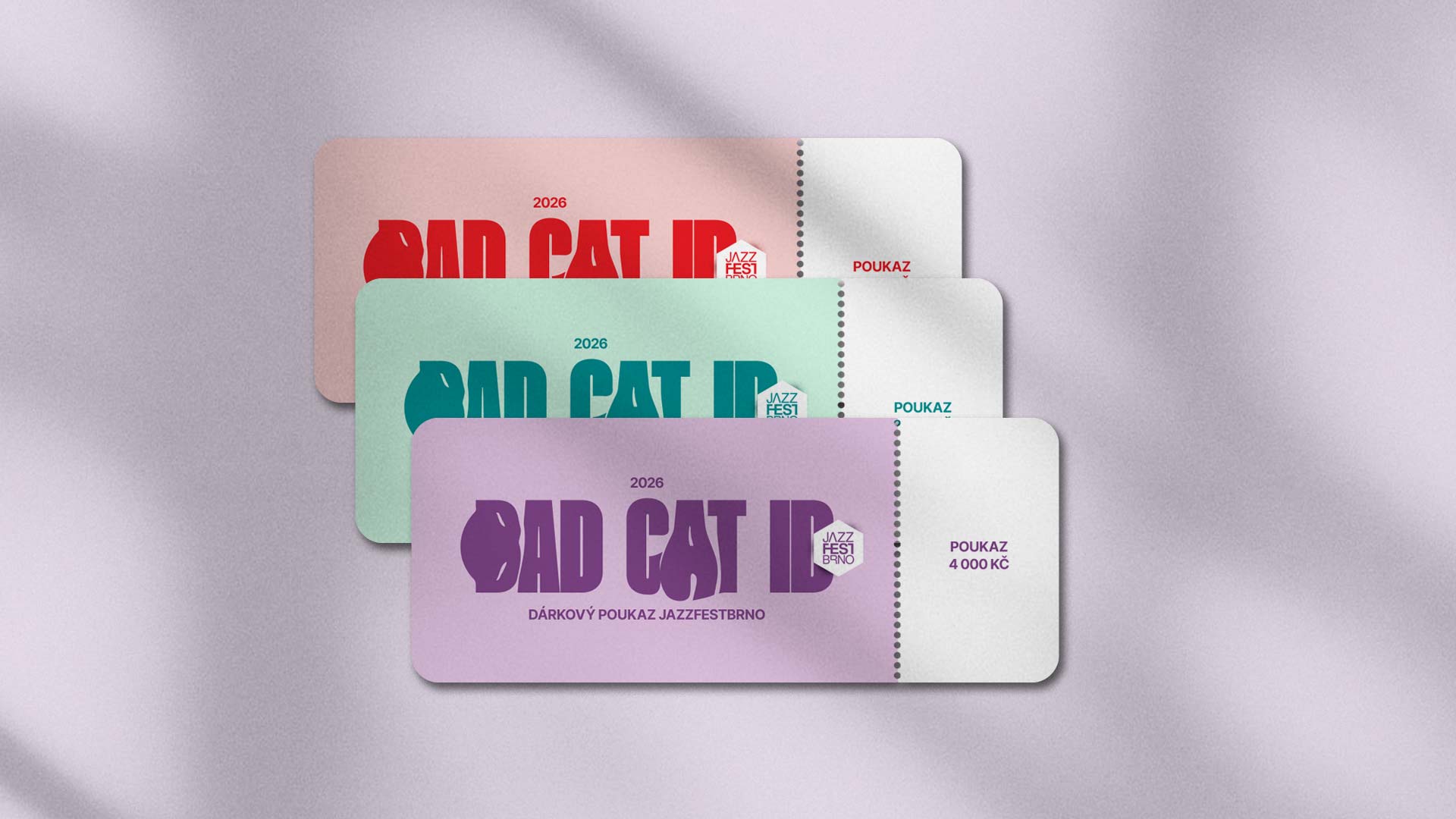
BAD CAT ID voucher

Do you want to please someone with a concert ticket, but don’t know how to buy it for your loved one? That’s why we have Bad Cat ID – a jazz enthusiast’s card. Just choose the amount of the voucher and you will receive a gift from us on top of each one: a voucher for 1,500 CZK (with a bag), for 2,000 CZK (with a T-shirt), or for 4,000 CZK (with fan club membership).